
First-year medical students from the Schulich School of Medicine & Dentistry are spending the week at Chatham-Kent Health Alliance as part of Discovery Week 2026, an annual program designed to introduce future physicians to community-based health care.
Now in its 28th year, Discovery Week places first-year medical students in health-care settings across Southwestern Ontario, providing an immersive look at medicine in real-world environments.
At CKHA, students are paired with physicians from a variety of specialties and spend the week shadowing care teams throughout the hospital. Participating physicians share their expertise and offer mentorship while introducing students to the realities of practising medicine in a community setting.
“Immersive placements like this give future physicians a real sense of what it’s like to live and practice in our community,” said Dr. Zeke Milkovic, chief of staff at CKHA. “Our physicians are proud to open their doors to students, and experiences like shadowing and hands-on learning help show just how rewarding community-based care can be.”
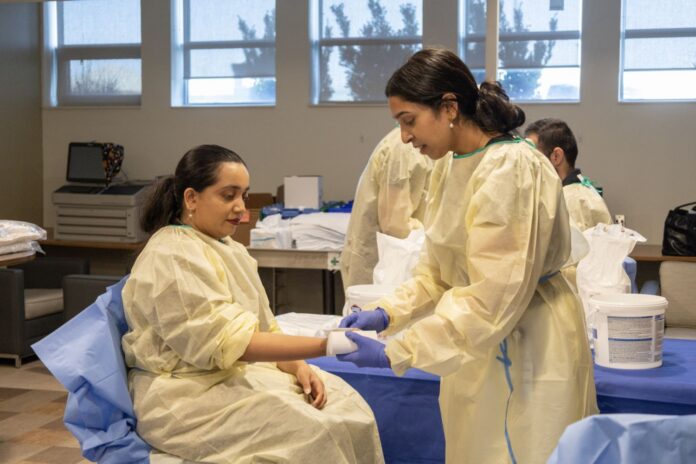
In addition to clinical shadowing, students are participating in interactive learning sessions, including casting workshops, CPR competitions and other simulation-style activities designed to help them develop foundational clinical skills.
“Our community partners play a vital role in our students’ medical education by providing exceptional, first-hand care experiences in rural and regional settings,” said Dr. Victor Ng, assistant dean of distributed education at Schulich Medicine & Dentistry. “We are grateful for this long-standing partnership with CKHA.”
The students are spending June 1 to 5 working alongside physicians and health-care teams in Chatham-Kent, gaining first-hand experience of daily life in a regional health-care setting.
More than 190 Schulich medical students are participating in Discovery Week this year, with placements in more than 30 communities across Southwestern Ontario, from Windsor to Owen Sound.
Program organizers say the experience helps students develop a deeper understanding of rural and regional medicine, and many participants later return to practise in the communities where they first trained.