

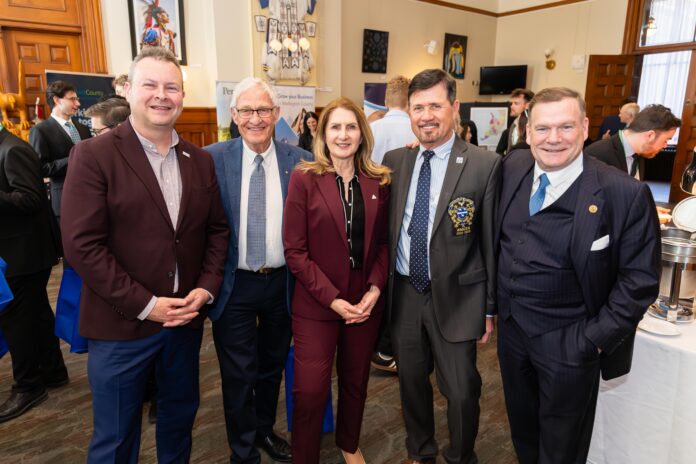
The Western Ontario Wardens’ Caucus met with provincial leaders at Queen’s Park on Tuesday to advance its 2026 advocacy priorities, focusing on infrastructure to support housing growth, strengthen homelessness response and improve regional transit across rural and small urban communities.
WOWC members held meetings with several Ontario cabinet ministers, including Rob Flack, Lisa Thompson, Todd McCarthy and Sam Oosterhoff.
The discussions centred on ensuring infrastructure funding keeps pace with growth in smaller communities, improving alignment of homelessness funding with rural service delivery needs and advancing regional transit options, including the potential creation of a regional rural transit authority.
“Western Ontario communities are ready to support growth, but we need the right tools in place to do it,” said WOWC chair Marcus Ryan. “Our focus is on practical, targeted solutions that will help deliver housing, strengthen essential services, and ensure people can move throughout the region to access jobs and opportunities.”
In addition to the group’s core priorities, discussions also touched on infrastructure planning, energy needs and broadband expansion, which WOWC says are key to supporting long-term economic development and sustainable growth.
WOWC emphasized its role as a partner to the province and the need to ensure rural and small urban communities are reflected in provincial policy and program design.
“Today’s conversations were productive and forward looking,” Ryan said. “We are committed to continuing this work with the Province to ensure policies and investments reflect the realities of rural and small urban communities, and support long-term, sustainable growth across Western Ontario.”
The caucus represents 15 upper and single-tier municipalities across Southwestern Ontario, serving more than 1.6 million residents, and advocates for regional priorities through research, analysis and engagement with provincial and federal governments.