
By Justin Sinnaeve, Audiologist, All Ears, Wallaceburg
Chatham-Kent is known for farming, but also for its industrial history. For those who have experienced noise exposure in the workplace, the criteria for occupational noise-induced hearing loss claims has now changed in Ontario as of October 7th, 2026. Many people in Chatham-Kent have worked in noise long before hearing protection was commonplace. Modern hearing protection programs are often highly effective. However, WSIB still supports eligible claims for individuals with work-related hearing loss who have long since exited the workforce. Being retired does not, by itself, prevent someone from qualifying. I wish to relay recent changes to Ontario’s noise-induced hearing loss program as a public service announcement. If you’ve worked in noise and are experiencing hearing challenges, or know someone who is, this article may be of interest to you.
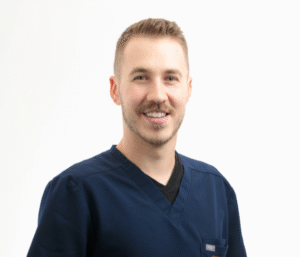
I have been practicing audiology in Chatham-Kent since 2022 at my clinic All Ears (in Wallaceburg). Over the years, I have reviewed hundreds of cases privately to help individuals understand whether or not their hearing loss may be related to noise exposure. WSIB qualification criteria is available publicly – though many people are simply unaware of it, or unable to interpret it. I participated in discussions surrounding the recent noise-induced hearing loss program changes as a member of a professional committee and have a technical understanding of the program requirements.
Ontario’s Workplace Safety and Insurance Board (WSIB) has updated its noise-induced hearing loss (NIHL) policy, effective October 7, 2026. One of the primary changes concerns the objective threshold criteria taken from a person’s audiogram – the graph that forms part of your hearing test results.
Historically, WSIB has used an age-correction factor in its eligibility criteria, subtracting half a decibel for each year a person was over 60 at the time of their hearing test. That automatic deduction is now being eliminated. At the same time, the minimum average hearing loss is increasing from 22.5 dB to 26.25 dB in each ear.
In effect, these changes raise the bar for some people to qualify while lowering it for others. Someone with a milder hearing loss may fall below the new threshold, while an older individual may benefit from the removal of the age correction. The effect depends on the person’s age and hearing test results.
The new hearing-loss “barrier to entry” is a pure-tone average of at least 26.25 dB in each ear at the frequencies of 500 Hz, 1 kHz, 2 kHz and 3 kHz. This by itself is not the only thing taken into consideration with a claim for noise-induced hearing loss, but is merely set as minimum criteria. There are some presentations of hearing loss that are consistent with noise exposure, and some that are not. The degree of symmetry between ears is another consideration, for example. WSIB employs audiologists to evaluate claims, but you can see an audiologist privately to gather an opinion on (1) whether or not the hearing loss may be sufficient for WSIB criteria and (2) if it appears consistent with noise exposure.
Another aspect of these claims is the level of noise in the workplace and how long you worked there. Workplace-noise benchmark remains 90 dBA over an eight-hour workday for five years or more, or an equivalent exposure. Cases below that benchmark can still be considered individually. Older hearing tests and a detailed history of your employers, duties and noise exposure can all help support your assessment.
If you would like an opinion on whether you may qualify, speak with an audiologist – a regulated health care professional in hearing and balance. An audiologist can help you understand your results and whether a claim may be appropriate; some offices even assist you with paperwork for your submission. WSIB makes the final eligibility decision once it has been submitted.
Justin returned to school to study hearing for 6 years in 2014. He is an audiologist registered with CASLPO and practices at his clinic All Ears in Wallaceburg. He has 3 kids together with his spouse Jana who is also an audiologist – they met in ‘ear school’ and have a hard time not talking about ears…hence the name, All Ears.
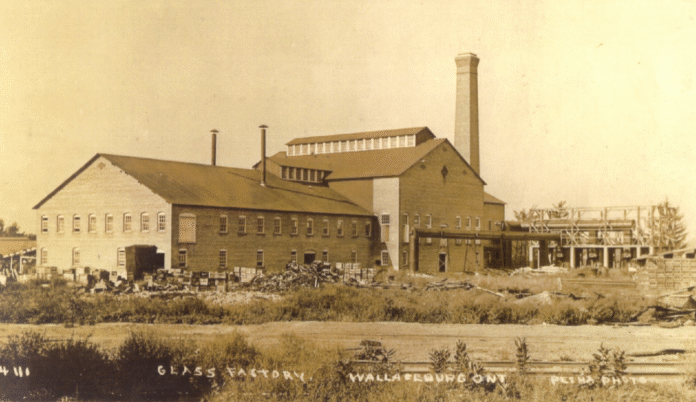
Featured Image credit: Early American Pattern Glass Society (EAPGS), “Sydenham Glass Works Postcards.”
– This story is sponsored content.