


Morning Coffee – By Aaron Hall

Weather forecast for Tuesday, March 27, 2018
A special weather statement continues across Chatham-Kent. More details, here.
Today – Rain at times heavy. Amount 15 to 25 mm. Wind south 30 km/h gusting to 50. High 8.
Tonight – Periods of rain ending this evening then cloudy with 40 percent chance of drizzle. Fog patches developing this evening. Wind southwest 20 km/h becoming northwest 20 near midnight. Temperature rising to 10 this evening then falling.
New measures to reduce barriers to treatment and $231M to address the opioid crisis
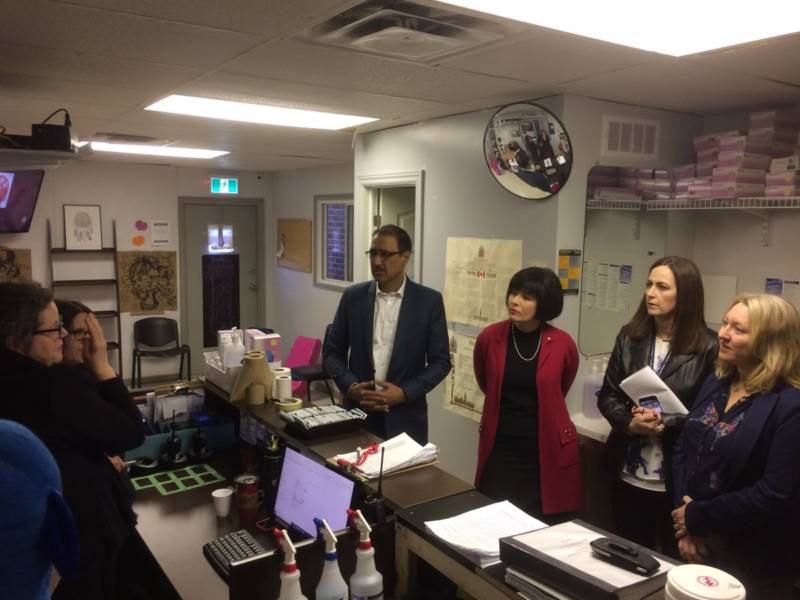
The opioid crisis continues to have a devastating impact on families and communities across the country.
In 2017 alone, projections suggest over 4,000 people will have lost their lives as a result of this epidemic.
Despite significant actions taken to date, more needs to be done to help address the crisis and save lives.
On Monday, the Honourable Ginette Petitpas Taylor, Minister of Health, announced a number of important initiatives to help address the opioid crisis.
First, the Minister announced that the Government of Canada is removing barriers to accessing diacetylmorphine (prescription heroin) and methadone for the treatment of opioid use disorder. These regulatory amendments will help Canadians have greater access to a comprehensive array of treatment options. For example, for methadone, health care practitioners will be able to prescribe and administer methadone treatment without needing to apply for an exemption from federal law. For diacetylmorphine, the amendments will provide flexibility by allowing patients to receive the product outside a hospital setting, such as substance use disorder clinics, thereby allowing patients to balance their daily responsibilities with their treatment. The regulatory amendments were published in the Canada Gazette, Part II on March 21, 2018.
Second, Minister Petitpas Taylor announced $18 million in federal investments for six innovative projects under the Substance Use and Addictions Program, and ten research projects related to opioids funded through the Canadian Institutes of Health Research (CIHR). These projects will explore drug checking in supervised consumption sites, opioid use in pain management, the development of guidance material for prevention and treatment of opioid use disorder, and to look at how opioid-related treatment can better address the needs of women.
Third, the Health Minister announced details of the $231.4 million investments proposed in Budget 2018 to improve access to treatment, address stigma and gather more data to help address the opioid crisis. These investments include:
– $150 million in emergency funding for provinces and territories to increase access to evidence-based treatment;
– $13.5 million towards innovative approaches to treatment and prevention through Health Canada’s Substance Use and Addictions Program;
– $18.7 million over five years to address stigma faced by people who use drugs, including launching a new national, multi-year public education campaign to help reshape Canadians’ attitudes and perceptions about people who use drugs;
– $31.6 million to equip border officers with tools to intercept fentanyl and other dangerous substances at the border; and
– $17.9 million to expand the evidence base to inform and evaluate our response to the opioid crisis, including accelerating access to public health data and analysis.
“We should not judge people with substance use problems but instead make sure they are getting the help they need, when they want it,” stated Taylor.
“The changes we announce today will allow health care practitioners to prescribe and administer methadone treatment without needing to apply for an exemption. The new funding proposed in Budget 2018 will also help us improve treatment, reduce stigma and gather more data to reverse the heartbreaking trend of opioid-related deaths in Canada.”
Taylor concluded the event by thanking the Canadian Research Initiative in Substance Misuse (CRISM) for its recently released report and recommendations on removing regulatory barriers to methadone treatment and its expertise on developing a national clinical practice guideline on the management of opioid use disorders.
These recommendations helped shape the regulatory amendments announced on methadone.
“There’s no doubt that the illegal production and trafficking of opioids, including fentanyl, have contributed to a public health crisis in Canada,” stated Ralph Goodale, Minister of Public Safety and Emergency Preparedness.
“We recognize that this is a complex social, health and public safety issue and we are committed to an approach to this crisis that is comprehensive, collaborative, compassionate and evidence-based.”
Dr. Theresa Tam, Chief Public Health Officer of Canada, added: “It is important for us to signal to those who use drugs and the people around them that treatment is an individualized journey. Better access to treatment options and additional funding announced today will enhance our collective ability to respond to address the opioid crisis in a comprehensive and collaborative manner.”
More details:
– Methadone and diacetylmorphine, or pharmaceutical-grade heroin, are medications that can be used to treat opioid use disorder.
– Health Canada has heard from stakeholders that any barriers to accessing treatment can deter patients and doctors from using them. This is why Health Canada is removing federal barriers to methadone and diacetylmorphine.
– The Government of Canada is focusing on three key areas as part of its comprehensive and evidence-based approach to saving lives and addressing the opioid crisis:
– Working with provinces and territories to increase access to treatment;
– Supporting innovative approaches to addressing the opioid crisis; and
– Addressing the stigma related to opioid use.
– The Substance Use and Addictions Program is a federal contributions program that provides financial support to provinces, territories, non-governmental organizations and key stakeholders to strengthen responses to drug and substance use issues in Canada.
– Through the Canadian Institutes of Health Research, the Government is funding scientists whose work is helping to provide the evidence of which interventions work best to treat pain, prevent opioid overdoses and how to treat opioid use disorder and promote harm reduction.
Get ready to do your 2017 income tax and benefit return

Services and information
Filing deadline: April 30, 2018
Most Canadian income tax and benefit returns for 2017 are due on April 30, 2018. If you or your spouse or common-law partner is self-employed, you have until June 15, 2018.
Filing early ensures your benefit and credit payments are not delayed or stopped. If you have a spouse or common-law partner, they should also file a return early.
The benefit and credit payments include:
– Guaranteed income supplement (GIS);
– Canada child benefit (CCB) (including any related provincial or territorial benefits);
– GST/HST credit (including any related provincial credits); and
– Working income tax benefit (WITB)
New – This year, the Canada Revenue Agency is making it easier for paper tax filers to do their taxes by mailing them their forms and guides directly.
Want your tax refund faster?
Register for direct deposit, and receive your income tax refunds and benefits quickly and securely.
Need to Make a Payment?
Make a payment, and learn about payment methods and what options are available when you owe money.
For more information on filing your taxes, click here.
Do you have a Will?
Join Jocelyn Kraayenbrink, Wills and Estate Lawyer, as she discusses why you should have a will, what probate fees are and much, much more.
Everyone is welcome to attend the event at the Wallaceburg Library at 6:30 p.m.
Space is limited and registration is required.
Call the library at 519-627-5292.
Statement by Foreign Affairs Minister on seven years of conflict in Syria

The Honourable Chrystia Freeland, Minister of Foreign Affairs, issued the following statement on Monday:
“This month marks seven years of conflict and tragedy in Syria, and the plight of the Syrian people remains as dire as ever.
“Throughout the month of March alone, we have seen new waves of violence, with over 200,000 Syrians forced out of their homes in eastern Ghouta and Afrin. It is estimated that over 1,600 civilians have been killed in eastern Ghouta alone. We have also seen continued reports of the use of chemical weapons by the regime in Syria and indiscriminate attacks against civilians and humanitarian workers.
“Any use of chemical weapons is a violation of international law. Canada calls for the perpetrators of these barbaric acts to be brought to justice.
“March also saw the release of a devastating report, by the UN Human Rights Council’s Independent International Commission of Inquiry on the Syrian Arab Republic, detailing evidence that Syrian government forces and other parties to the conflict have made widespread use of rape and sexual violence as a weapon of war. Such acts are war crimes. The report’s authors have recommended that the UN Security Council refer their findings to the International Criminal Court for possible prosecutions. We agree.
“The international community is watching and the perpetrators must be held accountable. Canada is actively engaged in efforts to hold perpetrators accountable. We are providing essential financial support to the collection and preservation of evidence in the region. This includes funding for sexual and gender-based violence investigators via UN Women, the Commission for International Justice and Accountability, and the International, Independent and Impartial Mechanism on International Crimes Committed in the Syrian Arab Republic. In addition, Canada has provided $12 million for groups in Syria, such as the White Helmets, that are saving lives by providing communities with emergency response services and removing explosives. We encourage the international community to join Canada and continue to finance this important work.
“Russia and Iran, allies of the Syrian regime, bear moral responsibility for the continued suffering of the people of Syria.
“After seven years, there are simply no words left to describe the extent of human suffering in Syria. History will look unkindly on us all if we do not take collective action to end this conflict. We cannot allow what is happening in Syria to be normalized, as too often it is today.
“Canada calls on all parties to this conflict to respect their obligations under international humanitarian law, cease attacks on civilians and humanitarian workers and allow rapid, safe and unhindered humanitarian access to populations in need. Millions of people in Syria remain in need of lifesaving assistance seven years into this conflict.”
World news
Russian president says ‘criminal negligence’ to blame for shopping mall fire
Understanding Earth’s frozen reaches – aka the cryosphere
Man drives car onto walkway after being instructed by his Uber app
K-pop star Seo Minwoo has died at age 33
Founder of an alleged New York cult arrested for sex trafficking and conspiracy
Stormy Daniels sues Trump’s personal attorney for defamation
North Korean leader Kim Jong Un is visiting China, sources say
Quebec mosque shooting suspect Alexandre Bissonnette pleads not guilty
US, 14 EU states and Canada expel Russian diplomats over spy poisoning
If you have a suggestion, story idea, column idea, or if you want to say hello… drop me an e-mail at aaron@sydenhamcurrent.ca.