

The Ontario government has introduced legislation aimed at removing internal trade and labour mobility barriers, which it says will strengthen economic ties across Canada and help protect the province’s economy.
The proposed Protect Ontario Through Free Trade Within Canada Act would make Ontario the first province to eliminate all of its party-specific exceptions under the Canadian Free Trade Agreement. It also includes measures to allow certified workers from other provinces to begin working in Ontario immediately under “as of right” rules, while completing a streamlined registration process.
“For too long, we’ve let red tape and endless regulations hold back our economy,” Premier Doug Ford said Monday. “This legislation will make Ontario a national leader in interprovincial trade and help strengthen and unify Canada.”
Trade barriers within Canada are estimated to cost the national economy up to $200 billion annually and lower GDP by nearly eight per cent, according to government figures. Ontario says these barriers also contribute to higher prices on goods and services for consumers, by as much as 14.5 per cent.
The bill outlines several initiatives, including:
Allowing mutual recognition of goods, services and certifications with reciprocating provinces and territories;
Expanding “as of right” labour mobility to allow more workers — including regulated health professionals — to practise in Ontario while waiting for local registration;
Enabling direct-to-consumer alcohol sales across provincial borders;
Launching a $50-million Ontario Together Trade Fund to help businesses grow interprovincial markets and strengthen supply chains;
Establishing an annual “Buy Ontario, Buy Canadian” day on the last Friday of June to promote local products.
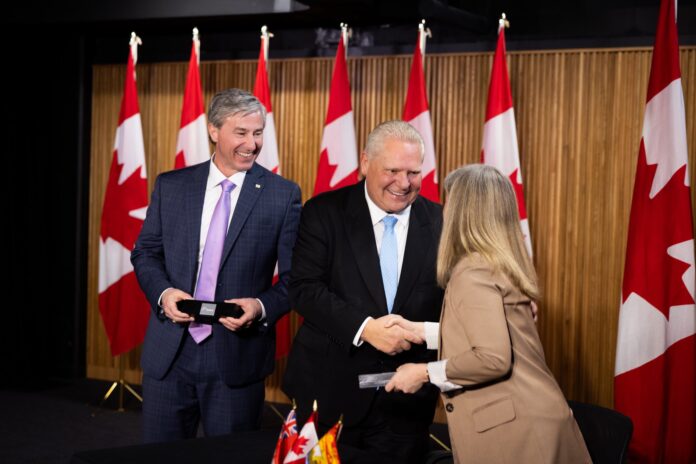
The Ford government has also signed memorandums of understanding with Nova Scotia and New Brunswick to improve the free movement of goods, services and workers. The MOUs include plans to support reciprocal direct-to-consumer alcohol sales and mutual recognition of certified workers.
“This is a significant moment for our country,” said Nova Scotia Premier Tim Houston. “Last month, we passed our own free trade legislation — a first in Canada — and we’re proud to partner with Ontario.”
New Brunswick Premier Susan Holt called the MOU “an important step” in improving labour mobility and access to consumer goods, and urged other jurisdictions to follow suit.
Ontario is Canada’s largest interprovincial trader, accounting for $326.6 billion in two-way trade with other provinces and territories in 2023. The province says nearly 35 per cent of Canada’s trade occurs within its own borders.
Economic Development Minister Vic Fedeli said the legislation and new trade fund would “create new opportunities to grow our economy, secure supply chains and unify our country.”
The province is also working to advance mutual recognition efforts in areas such as trucking and consumer goods — excluding food — through ongoing negotiations under the Canadian Free Trade Agreement.