

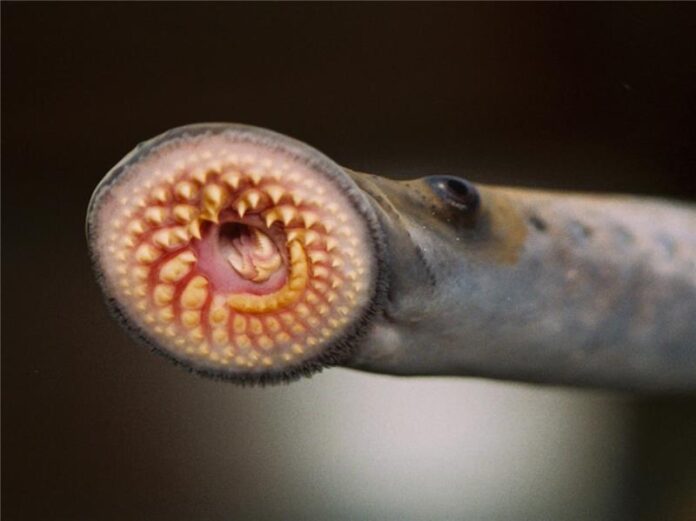
Fisheries and Oceans Canada (DFO) has launched its 2025 Sea Lamprey control field season, continuing efforts to manage the invasive species across the Great Lakes and protect native fish populations vital to the ecosystem and economy.
Sea Lamprey, an aggressive parasitic species, attach to and feed on fish, posing a major threat to recreational, commercial, and Indigenous fisheries. DFO, in partnership with the U.S. Fish and Wildlife Service, leads a binational program under the Great Lakes Fishery Commission to assess and control lamprey populations using targeted treatments.
Between April and November, trained crews will apply regulated lampricides — TFM and Bayluscide — to infested streams and still-water areas where young Sea Lamprey develop. The substances are designed to eliminate larvae before they enter the lakes, where they can cause significant harm. Lampricides are approved by Health Canada and the U.S. Environmental Protection Agency and break down naturally in the environment, posing no risk to public health or the ecosystem.
Local residents may notice DFO crews working in and around select tributaries. Water in treated areas may appear yellow during application, but swimming, boating, and fishing remain safe. Residents in areas drawing drinking or irrigation water from these sources will be notified in advance.
In 2025, treatments are scheduled in Canadian waters of all five Great Lakes. Locations include the Goulais and Kaministiquia Rivers in Lake Superior, Echo and Nottawasaga Rivers in Lake Huron, Big Otter and Big Creek in Lake Erie, and Bronte and Rouge Rivers in Lake Ontario. U.S. tributaries of Lake Ontario are also included in the plan.
Beyond lampricide treatments, DFO operates 31 barriers across Canadian tributaries to block adult Sea Lamprey from reaching spawning grounds. Many barriers are equipped with traps to monitor lamprey numbers during the spring run. Crews will also conduct surveys using electrofishing and other methods on over 150 tributaries to assess the effectiveness of control measures.
The Sea Lamprey Control Program plays a vital role in maintaining biodiversity and supporting long-term sustainability of Great Lakes fisheries. DFO reminds the public that introducing aquatic species into non-native waters or depositing harmful substances without proper authorization is illegal under federal regulations.