

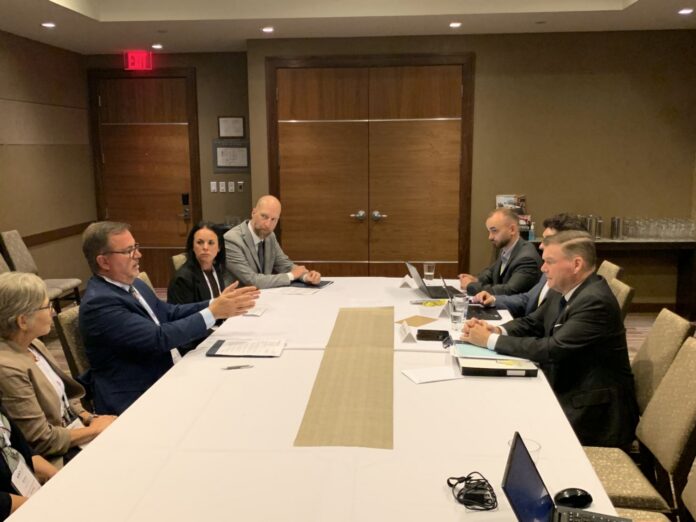
Chatham-Kent representatives are using this week’s Association of Municipalities of Ontario (AMO) conference to press the province for greater investment in some of the community’s most pressing challenges, including renovictions, stormwater management, supportive housing and critical infrastructure.
The Chatham-Kent delegation includes Mayor Darrin Canniff and Councillors Lauren Anderson, Melissa Harrigan, Brock McGregor, Carmen McGregor, Morena McDonald and Alysson Storey, along with municipal staff supporting meetings and advocacy efforts. Throughout the conference, the delegation is meeting with provincial ministers and officials to advance Chatham-Kent’s priorities.
“Municipalities are on the front lines of some of the biggest challenges facing Ontario, but we cannot solve them alone,” Canniff said. “We are at AMO to make sure Chatham-Kent’s voice is heard and to advocate for the funding and partnerships we need to deliver real solutions. We need to continue working with the Province to bring more investment back to Chatham-Kent and reduce the financial pressure on our local taxpayers.”
A major focus of the advocacy is greater provincial investment in supportive housing, including operating funding for the staffing, programming and services that help people transition from homelessness to stable housing. Chatham-Kent’s housing plan targets the creation of 50 supportive housing units and 392 affordable housing units over 10 years, while forecasts indicate the community will need thousands of additional units in the coming decades.
The municipality is also pushing for stronger provincial action to protect Ontario’s existing rental housing supply, calling for a province-wide approach to reducing inappropriate renovictions, including stronger verification and enforcement measures and improved protections for displaced tenants.
Chatham-Kent is seeking dedicated and more equitable provincial stormwater funding that reflects the needs of rural and amalgamated municipalities, with additional investment considered particularly important in communities such as Tilbury and Ridgetown, where future housing and growth depend on infrastructure upgrades.
The municipality is also seeking a $4-million provincial investment toward the Talbot Trail realignment project. About one kilometre of the trail has been closed since 2019 because of shoreline erosion, and the estimated $8-million project would establish a permanent realignment and restore the transportation connection.
“Our message is that Chatham-Kent is ready to invest and ready to build, but municipalities need sustainable partners,” Canniff said. “Every provincial dollar we can secure for infrastructure, housing, and social services is an investment in the future of Chatham-Kent and helps lessen the burden that would otherwise fall on local property taxpayers.”
Chatham-Kent’s participation at AMO is part of the municipality’s broader advocacy and government relations strategy, which focuses on building relationships with upper levels of government, identifying funding opportunities and ensuring local priorities are represented in provincial decision-making. The municipality said it will continue advocating beyond the conference for investments that support community growth, strengthen infrastructure, increase housing options and address homelessness, mental health and addiction.