

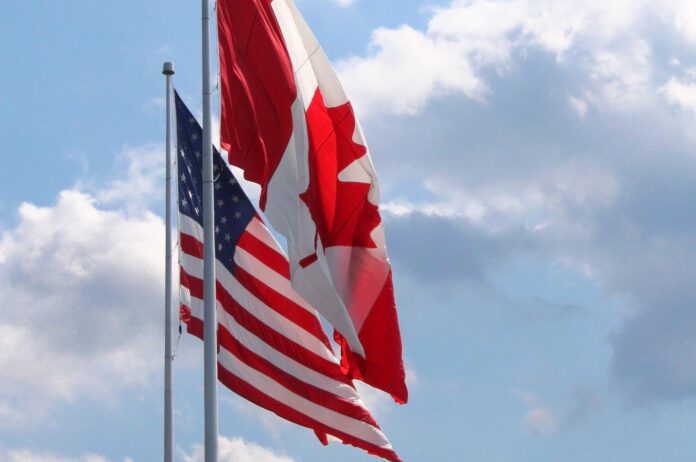
Prime Minister Mark Carney suspended trade negotiations with the United States Friday evening, just hours before Washington’s midnight deadline for new tariffs on Canadian goods, and vowed Canada would retaliate in kind.
In a statement released from Ottawa, Carney said Canada’s negotiating team had been ordered home after last-minute changes to the U.S. position proved unacceptable.
“As a result, this evening, I have decided to suspend trade negotiations with the U.S. and have directed Canada’s negotiators to return to Ottawa,” Carney said. “They have worked hard, in good faith, to defend the interests of Canadians throughout these negotiations up until the very last minute. However, last-minute changes in the U.S. proposed terms were unfair, uneconomic, and called into question the reliability of any deal.”
The prime minister said the U.S. intended to impose a 50 per cent tariff on roughly $28 billion of Canadian goods at midnight.
“Canada will match those tariffs dollar for dollar to protect our workers and businesses,” Carney said.
Carney said the two countries had made “important progress” toward a deal in recent weeks but that it fell short of Canada’s objectives, which he said included preserving tariff-free access to the U.S. market for the vast majority of Canadian businesses, providing greater stability to the trade relationship, and significantly reducing U.S. tariffs on key strategic industries.
“Over the past 18 months, Canada’s new government has focused on building our strength at home, diversifying our partnerships abroad, and striking a fair deal with the United States,” Carney said.
He said the government would introduce additional support measures for Canadian workers and businesses in the coming days, building on close to $25 billion in support already provided over the past 18 months.
“We have recognised from the beginning that America has changed, and that we will not return to our old relationship,” Carney said. “Our government understood, before many, that America is altering all its trade relationships. Putting tariffs on its closest allies and charging for access to its vast market.”
Carney said the breakdown in talks would not derail Canada’s broader economic strategy of building domestic strength and diversifying trade partnerships. He pointed to nearly $500 billion in major infrastructure projects underway and said existing free trade agreements already give Canada preferential access to 1.5 billion consumers, with that figure expected to double by the end of the year.
“Canada has what the world wants,” Carney said. “And we will not allow any nation to determine our future. We will set our own course to keep building Canada strong for all.”
U.S. Trade Representative Jamieson Greer responded shortly after midnight, saying Canada had declined to finalize a deal reached earlier in the week and accused Ottawa of making new demands that upended the agreement.
No further talks between the two countries were scheduled as of Friday night.