

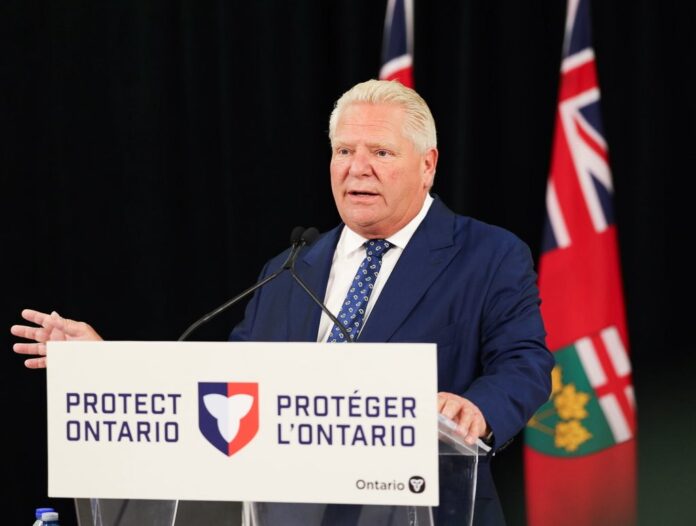
The fall sitting of Ontario’s legislature has concluded with the passage of 12 government bills that the province says advance its plan to protect Ontario by strengthening the economy and supporting workers, businesses and communities.
According to the Premier’s Office, the legislation focuses on cutting red tape, investing in infrastructure, supporting workers, improving services and addressing affordability, while also advancing broader initiatives such as expanding energy capacity and unlocking critical minerals in Northern Ontario’s Ring of Fire.
“As Ontario workers and businesses continue to face down the uncertainty and upheaval caused by President Trump’s tariffs, our government is focused on protecting our province by creating a more competitive, resilient and self-reliant economy,” said Premier Doug Ford. “Over the last few months, we have continued to deliver on our plan to support workers and families by investing in infrastructure, keeping costs down, creating new opportunities for trade, cutting red tape to attract investment, building critical energy infrastructure and unlocking our vast reserves of critical minerals in the Ring of Fire in partnership with First Nations. These measures are helping keep workers on the job today and they’re creating the opportunity for long-term growth and economic prosperity for decades to come.”
During the sitting, the province took what it described as historic steps toward development in the Ring of Fire by signing community partnership agreements with Marten Falls First Nation and Webequie First Nation. The agreements are expected to lead to construction beginning on multiple segments of the road to the Ring of Fire next year and include infrastructure and community benefits for First Nations, while supporting the province’s goal of building all-season road access to the region. The government says development in the Ring of Fire has the potential to add $22 billion and 70,000 jobs to Ontario’s economy.
The government also highlighted progress on its energy strategy, including a partnership with the federal government to build the first Small Modular Reactors in the G7. The province says the reactors will power 1.2 million homes, create 18,000 construction jobs and support thousands of long-term careers, while contributing $38.5 billion to Canada’s gross domestic product over 65 years. Support was also announced for refurbishing the Pickering Nuclear Generating Station, a project the province says will help secure Ontario’s position as an energy superpower and support nearly 37,000 jobs during refurbishment and ongoing operation.
Infrastructure projects advanced during the fall sitting included the substantial completion of the Finch West LRT and Eglinton Crosstown LRT, early work on Highway 413, continued progress on the Bradford Bypass, the opening of the Confederation GO Station in Hamilton, expanded GO service across the network, including the first-ever weekend service to Kitchener, and continued investments through Ontario’s Municipal Housing Infrastructure Program.
The province also pointed to progress on its Primary Care Action Plan, which aims to connect everyone in Ontario to a primary care provider by 2029. Under the plan, more than 130 primary care teams have been created or expanded to connect more than 300,000 people to care, alongside investments in primary care teaching clinics to train future family doctors. Since the plan launched in January 2025, the Health Care Connect waitlist has been reduced by more than 70 per cent. In November, the province marked the opening of the West Lincoln Memorial Hospital as part of a broader plan to build and upgrade more than 50 hospitals across Ontario.
The government says it will continue delivering on its mandate in the coming months by working with the federal government on additional infrastructure projects, engaging with communities and stakeholders, and implementing legislation passed during the recent sitting.
The second session of the 44th Parliament began on Oct. 20, 2025. The province says legislation passed during the sitting amended more than 100 existing acts, created several new acts and repealed one, while supporting goals related to economic competitiveness, public safety, worker protections, energy security, housing and local governance.