

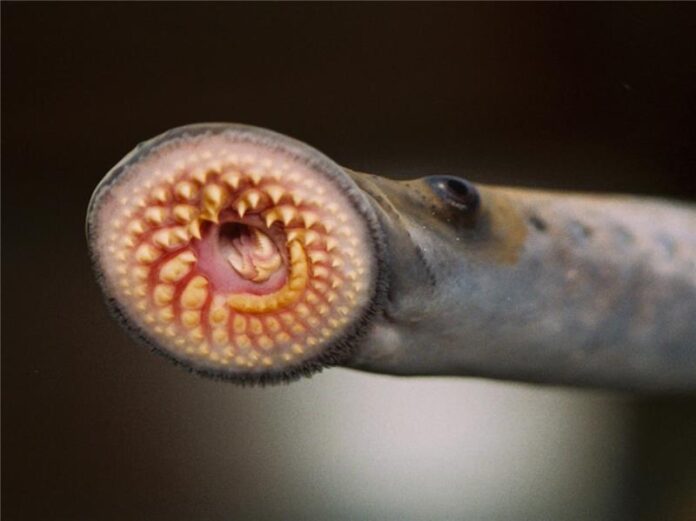
Fisheries and Oceans Canada has launched its 2026 field season to manage invasive Sea Lamprey in the Great Lakes, aiming to protect native fish populations and support the ecosystem’s overall health.
Sea Lamprey are an invasive species that attach to and feed on most fish, posing a serious threat to fish populations in a region vital to Canada’s economic and conservation goals. Canada and the United States work together through the Great Lakes Fishery Commission to manage the species, with DFO acting as the Canadian delivery agent alongside the U.S. Fish and Wildlife Service.
Between April and November 2026, crews will apply regulated lampricides, TFM and Bayluscide, to streams and still-water areas across the Great Lakes where young Sea Lamprey are present. DFO says the treatments are highly effective in reducing larval Sea Lamprey numbers before they migrate to lakes, where they can kill fish important to recreational, commercial and Indigenous fisheries.
The department says the lampricides do not pose a risk to human health or the environment, do not remain after application, and are registered by the U.S. Environmental Protection Agency and Health Canada’s Pesticides Regulatory Directorate. In Ontario, lampricide application is authorized by the Ministry of Environment, Conservation and Parks under the Ontario Pesticides Act.
Residents and boaters may notice crews working in and around certain tributaries this season, and communities drawing water from those areas for drinking or irrigation will be notified in advance. DFO says water may appear yellowish during treatment, which is normal, and that swimming, fishing and boating remain safe, with fish caught during this time safe to eat.
This year’s program includes tributaries and lentic areas on Lake Superior, Lake Huron and Lake Ontario in Canada, along with several tributaries on the U.S. side of Lake Ontario. DFO also maintains 31 barriers on Canadian tributaries to prevent migrating adult Sea Lamprey from reaching spawning areas, many equipped with traps to monitor the species during spring spawning season. Crews also conduct surveys using electrofishing and other tools on more than 150 tributaries to evaluate control efforts.
Spawning runs are monitored on rivers and creeks across all four lakes, including the Big Carp, Neebing and McIntyre rivers on Lake Superior, the St. Marys and Echo rivers on Lake Huron, Big Creek and Big Otter Creek on Lake Erie, and the Humber River, Duffins Creek, Bowmanville Creek, Cobourg Brook and Salmon River on Lake Ontario.
DFO notes that under the Aquatic Invasive Species Regulations, it is illegal to introduce an aquatic species into a body of water where it is not native, unless authorized by federal, provincial or territorial law.