
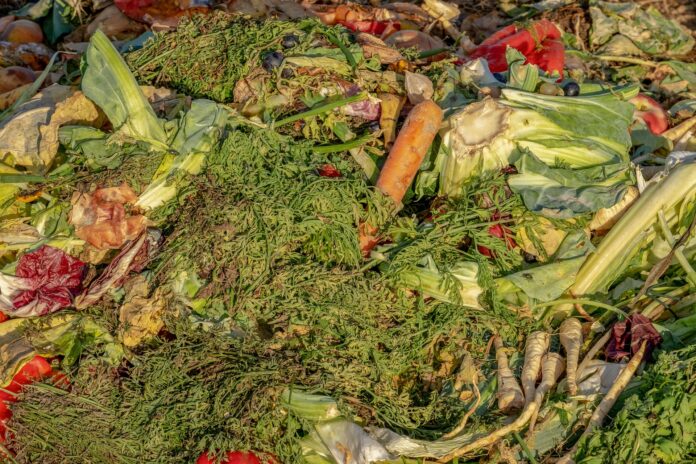
Faced with legislation from the Provincial Government to improve waste diversion numbers, Chatham-Kent Council voted in favour of an organic waste diversion program at their Monday, March 17, 2025 meeting.
Administration put forward the following recommendations, which were approved by Council:
– The recommended program for organic waste diversion, which includes a backyard composter program, a standardized curbside leaf and yard waste collection program (Option b.), and a pilot depot food waste digester program be approved.
– The capital costs of the recommended program, estimated at $4,269,378 be funded from the multi-year one-time budget ($706,628), recycling WDO reserve ($180,500), lifecycle AMP buildings reserve ($1,270,000), municipal fleet reserve ($2,112,250).
– The operating costs of the recommended program, estimated at $2,158,931 annually, be funded from general tax levy ($49,900) and area-rated tax levy ($2,109,031).
– The following full-time, permanent positions be approved as of January 1, 2027: Seven Waste Collector/Equipment Operator positions (7 FTEs), one dispatcher position (1 FTE), one Supervisor II, Operations (1 FTE).
– The contract project manager, waste management (1 FTE) be approved as permanent as of April 1, 2025, and be funded by reserves until December 2026, then from the recommended program’s area-rated budget thereafter.
– Administration be directed to report back on the Recommended Program’s impacts on leaf and yard depot operations and public works operations in 2029 or earlier.
South Kent Councillor Anthony Ceccacci also entered a successful amendment to the overall motion for Council to request full funding from the Province of Ontario to implement their legislation.
Ryan Brown, the director of public works in Chatham-Kent, said in a report a backyard composter program will be implemented in 2026.
To implement, the Municipality will purchase backyard composters in bulk and sell them to interested residents for $20 per unit.
Also included in the program is a standardized curbside leaf and yard waste collection in all curbside urban communities, while preserving the existing levels of service in the communities of Ridgetown and Thamesville.
The standardized program in most urban communities will provide bi-weekly collection of bagged leaf and yard waste and brush bundles from April to November with two extra collections in January of natural (Christmas) trees.
This program is to be implemented in 2027, contingent on the procurement timeline, Brown said.
A depot food waste digester pilot program will be implemented in 2028 at the Harwich Depot for one year, which will allow assessment of the viability of expanding this solution to add depots.
“This program will improve curbside communities’ diversion rate to 51% (from 31%) and the overall Chatham-Kent diversion rate to 53% (from 39%),” Brown said in a staff report.
“Therefore, it will enable the Municipality to comply with provincial legislation. Further, this program presents residents with both food waste and yard waste management solutions. Operationally, it will allow for a more streamlined collection system of yard waste, improved cost control, and performance management.”
Brown added: “The estimated program costs are about $4.27 million in capital and $2.16 million in operating. The capital expenses are recommended to be funded from the planned 2024-2027 multi-year budget and various reserves. The operating expenses related to the standardized curbside collection are recommended to be funded from area-rated tax levy, and the remainder operating expenses from general tax levy. This program will have minimum tax increase implications to non-curbside residents (mostly rural residents) as the majority of the annual costs are area-rated.”
Brown added the Ontario Food and Organic Waste Policy Statement (2021) calls for Municipalities with populations above 50,000 and population density less than 300 persons/km2 to have a collection system that achieves 50% reduction and resource recovery of food and organic waste generated by single-family dwellings in urban settlement areas by 2025.
Brown said this Policy Statement is approved under the Resource Recovery and Circular Economy Act, which makes Chatham Kent obligated to ensure that municipal powers that are used in relation to food and organic waste are done in a manner that is consistent with the Policy Statement.
Read Brown’s full report, here.