

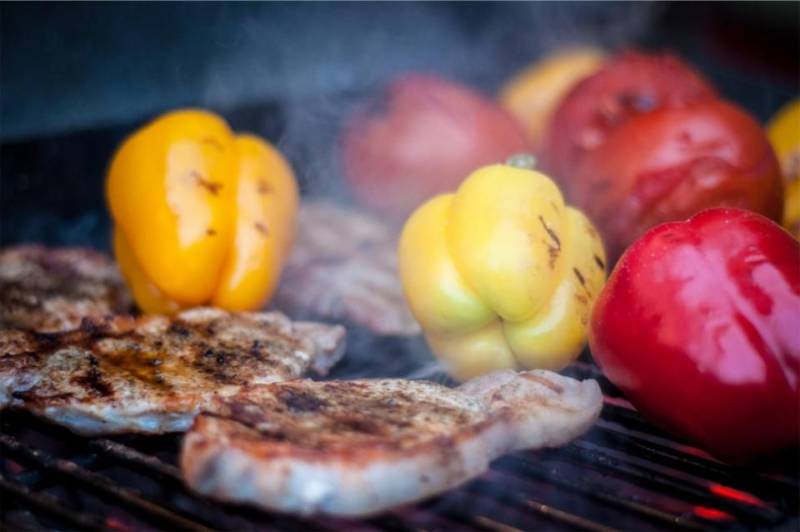
Protect yourself and your family this summer by preparing and cooking food safely.
Reduce the risk of food borne illness by following these four steps: clean, separate, cook, chill.
Here are some tips from the Chatham-Kent Public Health Unit:
Clean – Clean your hands, surfaces and equipment often. Bacteria can get on your hands, cutting boards, counter tops and utensils. Always wash your hands before handling, preparing, serving or eating food. Remember to keep kitchen equipment such as cutting boards, dishes, tables, counter tops, sink and appliances clean. Ensure that all fresh produce is washed thoroughly under cold running water.
Separate – Do not contaminate your food. Cross contamination occurs when bacteria is spread from one food item to another. This can occur when ready to eat or cooked foods come in contact with raw meat or other uncooked foods, dirty hands, or contaminated utensils. Keep raw and ready to eat foods separate.
Cook – Cook food to a high enough temperature and keep it out of the danger zone. The danger zone, between 4⁰C (40⁰F) and 60⁰C (140⁰F) is where bacteria grow rapidly. To ensure food is thoroughly cooked use a food probe thermometer to measure the temperature.
– Poultry (chicken, turkey, duck, etc.)- Pieces – 74⁰C (165⁰F) – Whole – 82⁰C (180⁰F)
– Pork – 71⁰C (160⁰F)
– Beef, veal, lamb
– Steaks and Roasts – Medium-rare 63⁰C(145⁰F), Medium 71⁰C (160⁰F), Well done 77⁰C (170⁰F)
– Ground – 71⁰C (160⁰F)
– Fish – 70⁰C (158⁰F)
– Food mixtures (e.g. soup, stews, gravy) containing poultry, eggs, meat or fish – 74⁰ C (165⁰F)
Chill – Keep cold foods cold. Cold temperatures (4⁰C or less) slow down the growth of bacteria. Store food in the refrigerator at 4⁰C or less (40⁰F). Store food in the freezer at -18⁰C or less (0⁰F). Put thermometers is your refrigerator and freezer to monitor the temperature and ensure food is kept out of the danger zone. Never thaw food on the kitchen counter, as bacteria growth can occur. To safely defrost frozen foods use one of the following methods:
– Defrost food in the refrigerator on a lower shelf in a container.
– Defrost food under cold running water.
– Defrost food in the microwave, cooking immediately after thawing.
For more food safety information contact Chatham-Kent Public Health Unit at 519-352-7270 or visit www.chatham-kent.ca