
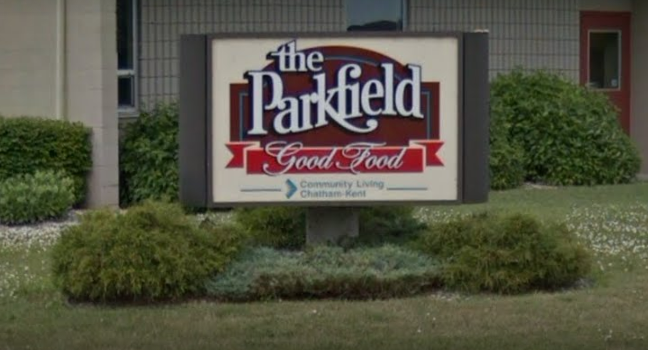
I have recently had some discussions with some good folks who are frustrated and critical of the closing of a local sheltered workshop employing some community members with developmental disabilities. News of the closing the Parkfield Restaurant, which provided sheltered work for people with developmental disabilities in Chatham….as well as some great food and atmosphere, provides an excellent opportunity for a conversation about what is real work for real pay for everyone in our communities? The issue isn’t one of putting people out of meaningful work, it’s one of recognizing people with disabilities (our sons and daughters, our siblings, aunts and uncles, nieces and nephews etc) are fully enfranchised members of our society that deserve, just like everyone else, to be covered under our existing labour laws; including minimum wage. Paying people pennies per hour for work, indefinitely, is illegal and immoral. Recognizing that people with developmental disabilities are citizens just like all of us is long overdue in my opinion. I applaud the efforts of our government to deal with this in a just fashion.
So, what are the real changes we need to make so that our workplaces reflect the makeup of the people who live in the communities? Where can people with developmental disabilities work at jobs where they are paid real wages and feel valued as employees?
Sheltered workshops, originally designed to support disabled jobseekers re-enter the workforce, provided a ready source of vocational programming in the community for the people who left the institutions and hospitals in the 1970’s throughout Ontario. However, many people who came to these workshops never left the charitable token economy that provided symbolic (pennies per hour), rather than “real”, paid employment.
The Ontario Government has partially answered this question by moving to stop new admissions to provincially funded sheltered workshops, like the Parkfield Restaurant. This is clearly the right move, but we have to ask – what happens next?
The answer lies within our own communities because the real change that is needed is neither a government solution nor a community agency solution. It is a community solution that requires building an inclusive community where every person with a disability who can work is gainfully employed.
The community solution starts with our schools where all children learn and play together and their differences become a natural part of being with one another. Then, as our schools work with youth to follow different paths in life, there must be mechanisms for all students to be able to make decisions about their future. Co-op programs during high school, for example, can provide opportunities for youth with a disability to experience the work world and make informed choices about the kind of work they may want to pursue as an adult. For students with disabilities, entry into the labour force after high school or post-secondary education or training must become the norm and there needs to be more and better labour market initiatives so that transition into the work force is successful.
Adults with developmental disabilities want to work and employers need committed employees. Workplace studies have shown that intellectually disabled individuals are often more loyal, reliable and have lower rates of absenteeism than other workers. Research also shows that people support socially progressive businesses that have inclusive workplaces.
The approach needed to provide inclusive employment or workplaces must be multi-faceted and encourage the involvement of the individual, family members and fellow employees. Community agencies and government must provide the tools to facilitate this approach.
The funding once used to support sheltered workshops can be redirected by government to develop and offer the tools to support prospective employees with disabilities find and integrate into the workplace of their choice. This funding can also provide the education and support to employers and co-workers as an employee with a disability integrates into the workplace.
Community agencies and service providers can use modern training methods and work with people with a disability to help them gain the skills and knowledge for employability. Once employed, job coaches can provide on-site training related to skills and work-related behaviour for employees with developmental disabilities and orientation and training for co-workers. Finally, as the employee gains skills and confidence and natural supports develop within the workplace, job coaches remain available for retraining and assisting with challenges.
Inclusive employment recognizes and celebrates the richness of diversity and reciprocal relationships in the workplace. Successful inclusive employment and real change will only happen when all facets of our communities work together to prepare and support people with developmental disabilities to be gainfully employed. This happens when consumers support inclusion and employers understand and recognize the skilled contributions people with disabilities can make.
As a parent of a child with a disability, my aspirations and hopes for my child to have a full and rich life with rewarding and well-compensated employment are no different than any other parent in our community. I have seen first-hand, despite initial fear and opposition, what big initiatives like integrated education and the closure of institutions have done for our communities. We are all better off. Good people with disabilities are now living and being educated within their communities, instead of being hidden, herded and institutionalized; our communities are so much the richer for it. Employment is the next phase in full integration. People who are full citizens live, get educated and work in their own communities for legal wages.
What can you do? Every one of us knows and perhaps cares deeply for someone with a disability. If you see a workplace that doesn’t represent our community, act & speak up! Ask a business owner if they have ever explored hiring someone with a disability. Patronize and promote businesses that support inclusion and diversity. Nothing says more than when good folks stand up and promote a business for being inclusive.
Derek McGivern
Wallacebrg
– Photo credit: Google Maps