

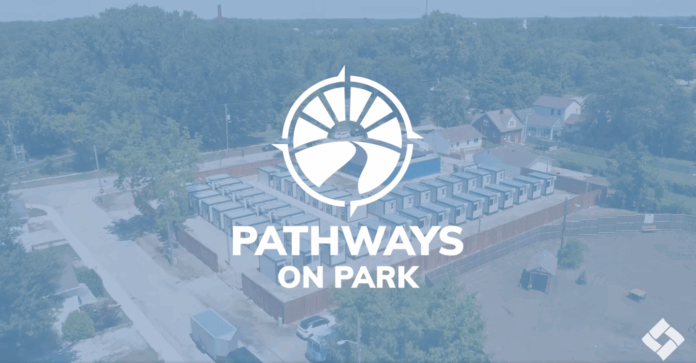
50 new supportive homes have opened in Chatham-Kent with the help of more than $3.7 million in federal funding.
The project, located at 392 Park Street, includes 50 small modular cabins and a shared community building on municipally owned land. Each cabin offers a private sleeping space, while residents share kitchens, bathrooms and common areas in the central building. The site is staffed around the clock to provide support and help residents transition to permanent housing.
“This investment is a major step forward in addressing the urgent need for supportive housing in Chatham-Kent,” said Mayor Darrin Canniff. “The 50 new cabins at Pathways on Park are now providing safe, stable spaces for residents who need them most, while helping people take the next step toward permanent housing. I want to thank the Government of Canada for their partnership and commitment to ensuring that every person in our community has a place to call home. Together, we’re building not just housing, but hope and opportunity for the future.”
The project was supported through the federal Affordable Housing Fund, which provides low-interest or forgivable loans and contributions to build or repair affordable and community housing.
“Our government is committed to providing communities the support they need to develop local solutions to homelessness,” said Gregor Robertson, Minister of Housing and Infrastructure. “The supportive homes in Chatham-Kent is another example of the federal government’s commitment toward ensuring that no one is left behind.”
The cabins were constructed using modular building techniques to accelerate delivery and reduce costs. Located near transit, childcare and key services, the site provides a safer, faster alternative to traditional construction for people experiencing homelessness.
The project is part of Build Canada Homes, a new federal agency created to boost affordable housing construction nationwide, including transitional and supportive housing.
As of June 2025, the federal government has committed $12.91 billion through the Affordable Housing Fund to support the creation of more than 50,000 units and the repair of over 174,000 units across Canada.