

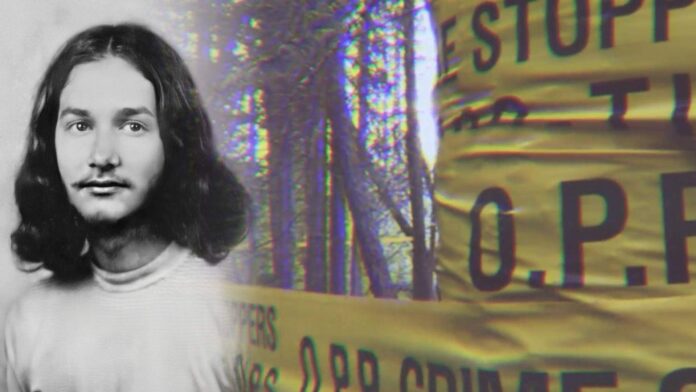
Human remains discovered in Algonquin Park in 1980 have been identified as Eric (Ricky) Singer of Cleveland, Ohio, through the use of investigative genetic genealogy, the Ontario Provincial Police announced recently.
On April 19, 1980, a hiker found human remains near the Hardwood Lookout Trail. Members of the OPP Whitney detachment, under the direction of the OPP Criminal Investigation Branch, conducted an extensive search with assistance from the Ministry of Natural Resources. A boot, leather wallet, clothing, a sleeping bag, camping gear and additional remains were collected and examined by the Office of the Chief Coroner and the Ontario Forensic Pathology Service.
It was determined the deceased was a white male between 18 and 21 years old. Investigators initially believed he had died between 1971 and 1978 but later narrowed the timeline to about two years before the discovery. Foul play was not suspected. Despite public appeals and comparisons to missing persons reports, the case went unsolved.
In 1995, a jawbone was found along the same trail and confirmed to belong to the same remains. In 2017, police released a three-dimensional clay facial reconstruction, which generated tips but no confirmed identification.
The case moved forward in April 2022, when the OPP submitted the male’s DNA to the DNA Doe Project for genetic genealogy analysis. By September 2023, investigators had located living family members, whose DNA confirmed the man’s identity as Singer. He was last seen at his parents’ home in Berea, Ohio, on Oct. 4, 1973.
This summer, Singer’s sisters travelled to Algonquin Park to walk the Hardwood Lookout Trail with investigators and visit the site where their brother spent his final days.
“After years of uncertainty, a family now has the answers they’ve been longing for thanks to the investigative efforts from many OPP units, the Office of the Chief Coroner, the Ontario Forensic Pathology Service and the DNA Doe Project,” said A/Senior Detective Inspector Sean Chatland of the OPP Criminal Investigation Branch. “Innovative tools such as investigative genetic genealogy are rewriting the possibilities for investigations, including historic cases. We’re deeply committed to continuing this important work and helping more families find the answers they deserve.”
“Eric Singer’s remains were found before I was even born. The fact that I’m involved in supporting his family in understanding what happened to him feels a little surreal,” said Detective Sergeant Philip Holmes, the OPP’s lead investigator. “This case demonstrates the incredible results that are possible when modern investigative tools, such as investigative genetic genealogy, are used to resolve historic cases and provide long-awaited answers to families. This was one of the most rewarding investigations of my career.”
“Since 1994, I’ve cared for Ricky’s remains and explored many avenues to identify him. IGG has become an amazing new tool to assist us in identifying individuals,” said Dr. Kathy Gruspier, forensic anthropologist with the Office of the Chief Coroner and Ontario Forensic Pathology Service. “In speaking with Ricky’s sisters, I was amazed at how much they remembered about him after all these years. Meeting them was a privilege and a powerful reminder of how meaningful this work is to families.”
“Up until this time, I never felt sad because it has been such a long time and you get numb to it,” said Singer’s younger sister, Merry. “This cuts through. I’m honoured, I’m humbled, I’m grateful. He was eventually found. He was identified and we were able to put him to rest and put ourselves to rest.”
More details, here.